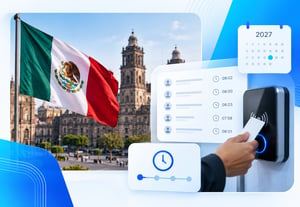
Beginning January 1, 2027, Mexico’s maximum ordinary workweek is scheduled to decrease from 48 hours to 46 hours as part of a phased reduction toward 40 hours by 2030. The reform also introduces an electronic workday record requirement, making accurate time capture, break tracking, overtime rules, audit trails, and reporting more important for employers with operations in Mexico.
For U.S.-based companies with employees, subsidiaries, plants, shared-services centers, or other tracked workforces in Mexico, this is not only a legal or HR issue. It is also a timekeeping, payroll, finance, and ERP data issue.
DATABASICS is helping customers review whether their current timekeeping configuration can support the operational requirements associated with the reform, including:
- Exact clock-in and clock-out timestamps
- Meal-start, meal-end, and break tracking
- Paid and unpaid break distinctions
- Effective-dated weekly overtime thresholds
- Double-time and triple-time overtime rules
- Daily and weekly exception alerts
- Restrictions or flags for employees under 18
- Original timestamp preservation after corrections
- Complete correction and approval audit trails
- Employee-level reporting
- Exports for payroll, ERP, reporting, or authority review
DATABASICS Time supports clock-in and clock-out workflows across web and mobile applications, including project/activity time capture and configurable policy rules. For companies using NetSuite, Sage Intacct, Microsoft Dynamics, SAP, Oracle, or another ERP, DATABASICS can help capture, validate, approve, report, and export time data that may feed downstream payroll, finance, project accounting, and reporting workflows.
“Mexico’s 2027 workweek changes give employers a clear reason to review how time records are captured and preserved,” said Marcel Syriani, COO at DATABASICS. “The question is not only whether hours are stored somewhere. Companies need to know whether their records include the timestamps, corrections, approvals, overtime classifications, and exportable detail that payroll, finance, and compliance teams may need.”
DATABASICS customers with Mexico operations should review their configuration before January 1, 2027, especially if Mexico-based employees currently share policy rules with another workforce group or if time data flows into a separate ERP or payroll system.
Final compliance depends on each employer’s configuration, workforce policies, legal interpretation, payroll setup, integrations, and any final technical specifications issued by Mexico’s Secretariat of Labor and Social Welfare. Employers should confirm requirements with legal counsel, payroll providers, and their DATABASICS implementation or support team.
DATABASICS has also published a planning guide for companies reviewing Mexico timekeeping requirements: Mexico’s 2027 workweek changes: what U.S. companies should review in their timekeeping system.