Mexico workweek reform finance readiness
Starting January 1, 2027, the ordinary workweek drops to 46 hours and electronic workday records become mandatory, effective Jan 1, 2027, with fines up to 5,000 UMA.
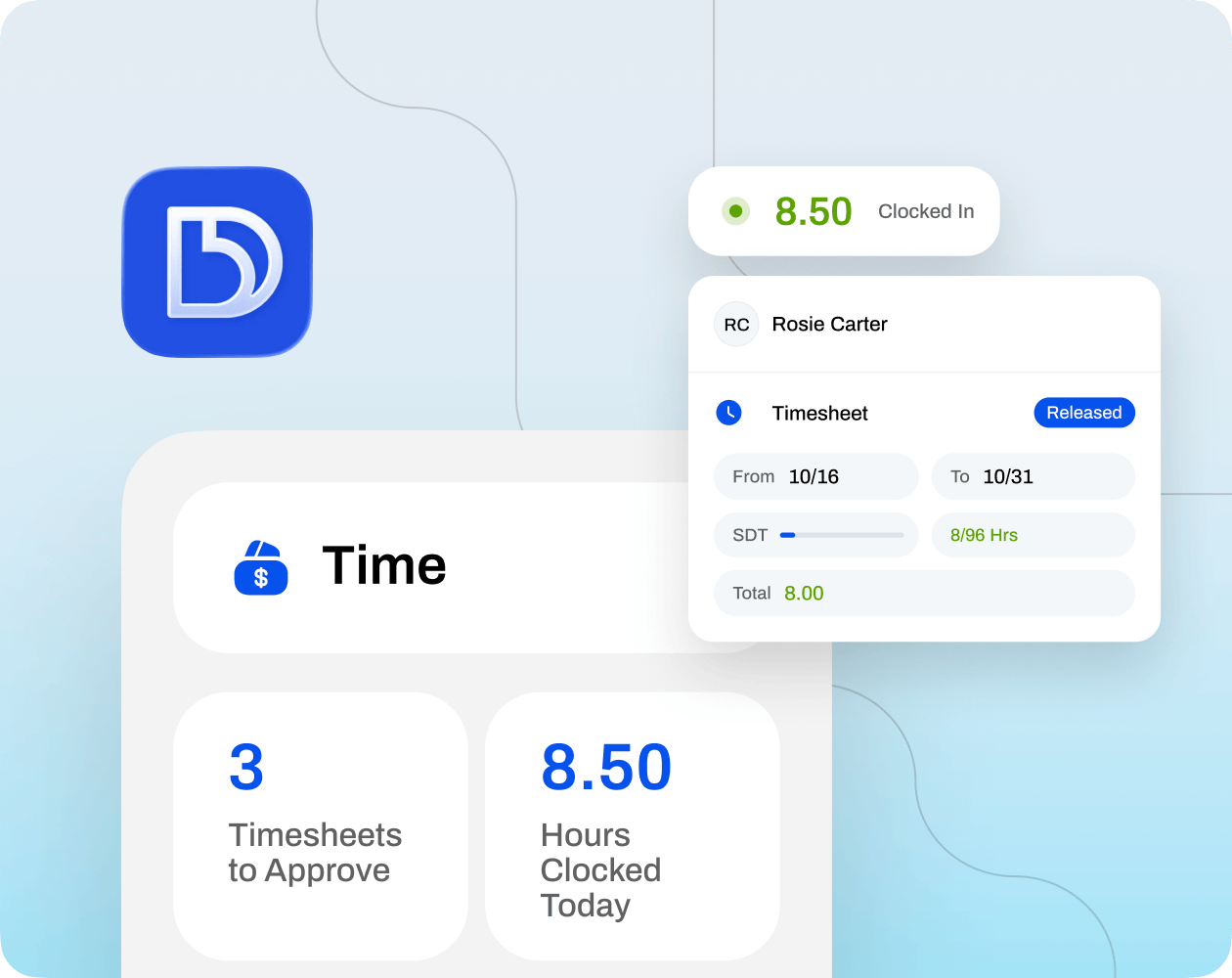
DATABASICS Time helps finance teams capture, preserve, and export the time data needed for each phase of the reform.
Request a DATABASICS Time Tracking demo below to learn more about how an automated solution can help you prepare for this change.
46
Hours in 2027
44
Hours in 2028
42
Hours in 2029
40
Hours in 2030
What changes and why it matters
This reform changes more than scheduling. Finance teams still need payroll to run accurately, close periods with confidence, and produce employee-level records that stand up to review.
The weekly ordinary-hours ceiling moves to 46 in 2027, then 44, 42, and 40 through 2030. Break treatment, correction history, approvals, and export-ready records all need to be handled in the timekeeping system.
Is your time tracking system set up for the changes on January 1, 2027?
Reach out to us to get support on managing employee time in Mexico for the January 1 deadline.
THE FINANCE VIEW
Six controls finance should test before 2027
Capture exact timestamps
Record clock-in, clock-out, meal, and break times at the employee level across web and mobile entry.
Preserve the record history
Keep original entries, corrections, approvals, and the person who made each change available for review.
Calculate effective-dated thresholds
Set weekly hour ceilings and overtime logic that can change on the January 1 dates from 2027 through 2030.
Flag exceptions early
Surface daily and weekly limit issues, break exceptions, and employee restrictions before payroll closes.
Produce inspection-ready exports
Make sure you can generate employee-level records for finance, payroll, audit, and labor authority review.
Check payroll and ERP handoffs
Confirm which fields move downstream, where correction history remains available, and how Mexico policies are separated from U.S. rules when needed.
One system for each reform phase
DATABASICS Time gives finance, payroll, and operations one place to capture hours, preserve review history, apply effective-dated rules, and hand clean records to downstream systems.
Time capture
Capture clock-in, clock-out, meal, break, project, and activity timestamps across web and mobile entry.
Policy rules
Apply effective-dated thresholds, overtime tiers, alerts, and employee restrictions as the workweek moves from 46 to 40 hours.
Audit and export
Keep approvals, corrections, and audit history attached to the source record so each change stays explainable.
Connected downstream systems
Move approved time data into ERP, payroll, and HR systems including NetSuite, Sage Intacct, Microsoft Dynamics, ADP, and Workday.
Mobile and field-ready
Support employees in the field with mobile entry while keeping finance teams aligned to one record of hours worked.
Readiness review support
Review policy design, data retention, exports, and integration touchpoints with a team that works in complex finance and labor environments.
SYSTEM READINESS
Build for the full phase-in
Your configuration needs to hold up in 2027 and keep working as the ordinary-hours ceiling steps down each January.
The first deadline
Start with the first threshold change, then confirm the electronic record structure behind it. Finance teams should know exactly which timestamps, approvals, and edits remain available after payroll closes.
- Weekly ordinary-hours ceiling set to 46
- Electronic workday records retained by employee
- Meal and break handling reviewed
- Approvals and correction history preserved

2027 · 46 hours
Effective January 1, 2027.
The second threshold
The second step is where hard-coded limits tend to surface. Review calculations, reports, and payroll mappings so the lower ceiling is applied cleanly without rebuilding the process.
- Thresholds move to 44 hours
- Overtime logic remains effective-dated
- Alerts and exception handling updated
- Payroll handoff re-tested

2028 · 44 hours
Effective January 1, 2028.
The third threshold
By 2029, the value of preserving clean employee-level history becomes even clearer. The system of record should show what changed, who approved it, and what was sent downstream.
- Weekly limit reduced to 42 hours
- Employee restrictions still align to policy
- Exports remain inspection-ready
- Audit history is easy to retrieve

2029 · 42 hours
Effective January 1, 2029.
The final threshold
Build now for the end state, not only for the first deadline. A system that supports the entire schedule reduces rework and keeps finance, payroll, and labor reporting aligned through 2030.
- Final ordinary-hours ceiling set to 40
- No pay reduction assumptions reviewed
- Policy and record controls remain consistent
- Finance reporting stays defensible

2030 · 40 hours
Effective January 1, 2030.

SYSTEM OF RECORD
Review the handoff to payroll and your ERP
You need more than a compliant entry screen. You also need downstream records that stay traceable after approvals, edits, and exports.
| What to review | Questions for your team | Why it matters |
|---|---|---|
| Clock-in and break data | Are exact timestamps captured for each employee and retained after approval? | Time data should support payroll accuracy and labor review. |
| Corrections and approvals | Can you see the original record, the change, and who approved it? | A corrected punch should not erase the source entry. |
| Effective-dated thresholds | Can the 2027, 2028, 2029, and 2030 hour ceilings be applied without rebuilding rules each year? | The phase-in schedule calls for durable configuration. |
| Employee policy groups | Do Mexico employees have the right policy set, separate from U.S. or other workforce rules when needed? | Country-specific rules should stay clear and maintainable. |
| Exports and downstream data | Which fields move to payroll or ERP, and where does review history remain available? | Finance needs both the exported record and the supporting trail. |
READINESS ROADMAP
From review to record readiness
A practical sequence helps finance teams test configuration, validate outputs, and prepare for the first January 1 deadline.
Step 1Review the current policy design
Identify which employees, schedules, breaks, and thresholds are in scope for Mexico. Confirm where ordinary hours, overtime rules, and exceptions are configured today.
Step 2Test record preservation
Check how original punches, edits, approvals, and correction history are stored. Make sure employee-level records stay retrievable after review and export.
Step 3Validate downstream outputs
Review which fields move into payroll and ERP systems, then confirm the exported record still ties back to the full time history used to approve pay.
Step 4Prepare for the phase-in schedule
Set the system up for 2027, 2028, 2029, and 2030 now so future threshold changes can be applied without reworking the foundation.
FAQ
Key questions finance leaders ask as the Mexico workweek reform approaches.
What changes on January 1, 2027?
Mexico’s maximum ordinary workweek falls from 48 to 46 hours on January 1, 2027. The reform also introduces an electronic workday record requirement, and the ordinary-hours limit continues to fall in annual steps until it reaches 40 hours in 2030.
Do employers need electronic time records?
The guide highlights an employee-level electronic workday record requirement. Finance teams should confirm the exact requirements with Mexican counsel and their payroll provider, then make sure the timekeeping system preserves the needed records in a review-ready format.
How do meal and rest breaks affect recorded hours?
Some meal and rest periods may count as working time when an employee cannot leave the workplace. That means break treatment should be reviewed in the policy design and reflected clearly in the record that supports payroll and compliance review.
Can DATABASICS support a Mexico configuration review?
DATABASICS Time helps teams review hour thresholds, preserve corrections and approvals, track employee-level records, and check the handoff into payroll or ERP systems. It gives finance a practical place to validate readiness before the first threshold change arrives.
What should finance validate first?
Start with exact timestamps, correction history, approval records, and the payroll export. If those pieces stay connected at the employee level, your team is in a better position to test threshold changes and defend the record behind each pay period.
Why plan for 2030 now?
The 46-hour ceiling is only the first step. A system built for effective-dated thresholds and clean record retention can support the full annual schedule to 40 hours with less rework across finance, payroll, and operations.

Prepare before the threshold moves
Review your Mexico timekeeping configuration now so finance has defensible records before January 1, 2027. DATABASICS can help your team assess hour thresholds, electronic record retention, approvals, and payroll or ERP handoffs.
- Review policy and break treatment assumptions
- Check employee-level record preservation
- Validate payroll and ERP outputs
- Plan for each January threshold through 2030
Subscribe to Our Blog
Subscribe to our blog and get the latest in time tracking and expense reporting news and updates.